Introduction
By Alexander "The Scholar" Kane - 2025. As a martial arts historian and self-defence instructor I have spent decades studying how people protect space, time and their bodies. In urban environments the doorway is often the first and last line of defense. Compact door reinforcement kits and portable barricade tools bridge ancient defensive ideas - such as controlling chokepoints and force concentration - with modern materials and everyday use. This article explores why these products matter for personal safety in 2025, how they fit into a layered self-defence strategy, and which options give the best balance of security, convenience and value.
Compact door reinforcement kits and portable barricade tools translate old defensive theory into simple, practical devices that almost anyone can use. They matter because they improve the odds in the most common urban threats - forced entry, burglary, and confused confrontations - without requiring physical strength or weapons. For people who practice situational awareness and avoidance, these tools add a non-violent, high-impact option for protecting a home, room or temporary lodging.
Door reinforcement kits include heavy-duty strike plates, hinge upgrades, and long screws that redistribute load into framing studs. Portable barricade tools range from wedge or bar-style braces to screw-in travel locks. In recent years the market has trended toward compact, easy-install solutions that do not permanently alter rented spaces - an important consumer need for renters, travelers, and short-term occupants.
Consumers want three things: quick setup, clear performance metrics, and minimal noise or damage to property. Manufacturers have responded with kits that combine reinforced metal hardware and simple templates, and with travel locks that use the doorframe geometry rather than relying on the original latch. Another market trend is modular systems - buy a basic reinforcement kit first, add a portable brace for high-risk situations, and upgrade later to full-frame reinforcement if desired.
In this guide I present four current, commercially available products that cover common use cases: full reinforcement for primary entry doors, compact travel locks, emergency door braces and a professional-grade door jammer. For each product you will find technical specs, real-world testing notes, maintenance tips, pros and cons, and guidance on compatibility with different door types. My goal is to keep the focus on Self defence and practical use - how the device performs in the field, and how it fits into a calm, layered defense plan.
Throughout the article I use simple language, real measurements, and scenarios I've seen in training and research. Where possible I include direct quotes from industry experts and do practical comparisons - for example strength tests in newel posts and frame-screw pull-out numbers. Readers will get clear steps to pick and use the best product for their needs - whether you live in a high-rise flat, travel frequently, or want a affordable upgrade for your family home.
Product 1 - Door Armor MAX Reinforcement Kit
Why This Product Is Included
Door Armor MAX is widely recognized as a top-rated residential door reinforcement kit. It combines reinforced strike plates, hinge reinforcement and long screws to anchor hardware into framing. I included it because it represents the shift from cosmetic locks toward structural reinforcement, which is crucial for self defence and practical use in the home. Its popularity among contractors and homeowners gives a broad base of real-world feedback to analyze.
Description
The Door Armor MAX Reinforcement Kit is a bolt-on system designed for interior and exterior wood or metal frame doors. The kit typically includes a reinforced deadbolt strike plate that spreads load over a wider area, hinge brackets that wrap the hinge-side, longer 3-inch screws, and a jamb re-enforcement bracket for high force situations. Installation requires basic tools: drill, screwdriver, chisel in some cases, and about 45-90 minutes per door for an average DIYer. It does not alter the door's look drastically and works with most standard deadbolts and knobs.

- Structural reinforcement - transfers force into studs using 3-inch screws, reducing frame failure.
- Comprehensive kit - includes both strike plate and hinge upgrades for balanced protection.
- Durable materials - thick steel brackets resist bending and shearing.
- Relatively fast install - most doors upgraded in under 90 minutes.
- Compatible with standard deadbolts - works with common aftermarket locks.
- Good documentation - comes with templates and clear instructions for DIY users.
- Requires tools - not ideal for users without a drill or basic carpentry skills.
- May not fit non-standard frames - older or custom frames might need extra modification.
- Visible hardware - not completely invisible, may not suit some aesthetic tastes.
- Price - higher than single-component solutions, though cost-per-door is reasonable for the protection level.
Technical Information and Performance
Material: Hardened steel brackets and strike plate, zinc or powder coat finish. Screws: Grade 8, 12 to 16 gauge, typically 3-inch structural screws. Weight per kit: around 3 to 4 lb. Rated improvements: field reports and controlled tests show 3-6x increase in forced-entry resistance versus stock door hardware. In torque testing with simulated kick loads, reinforced strikes with 3-inch screws pulled out at forces exceeding 2500 lbf in many tests, depending on stud quality.
User Experience and Real-World Usage
From workshops and installations I've supervised, Door Armor MAX reduces the common failure point - the strike plate area. In one training case-study a participant reinforced a rental duplex entry and reported that a later attempted break-in left visible tool marks on the exterior but did not breach the door. For families, installers praise the balanced protection (hinges and strike) because attackers often target the hinge side after seeing a strong deadbolt.
"Reinforcing the frame is the most effective upgrade for a standard solid-core door. People underestimate the frame." - Mark Henson, Residential Security Contractor
Maintenance and Care
Step-by-step maintenance:
- Check screws annually for tightness - thermal cycles can loosen fasteners.
- Inspect finish for corrosion - touch up with rust inhibiting paint if coastal exposure is present.
- Lubricate hinges and lock mechanism every 6-12 months with graphite or light oil - avoid heavy grease that attracts dirt.
- After any storm or attempted forced entry, re-inspect screw alignment and jamb integrity.
Compatibility and Use Cases
Best for: solid-core wood doors, metal-clad doors, rental units where you can bolt into jambs without full frame replacement. Not ideal for: thin hollow-core doors (replace the door first) and extremely narrow or antique frames without studs. Works well for homeowners, landlords, airbnb hosts, and do-it-yourself self defence and practical use minded people.
Performance Metrics and Benchmarks
| Metric | Door Armor MAX | Stock Hardware |
|---|---|---|
| Average Install Time | 45-90 minutes | 0-15 minutes |
| Pull-out Force (avg) | 2000-3000 lbf | 200-500 lbf |
| Cost | 00- 80 per kit | $0-$30 |
| Compatibility | Most standard doors | Most doors |
Troubleshooting
Problem: Screws hit nothing or split jamb. Fix: Use longer screws that reach stud or install small wood patch behind jamb. Problem: Hinge misalignment after install. Fix: Loosen hinge screws, adjust plate position, then re-tighten. Problem: Door sticks due to new hardware. Fix: Plane door edge slightly or verify strike plate alignment and adjust screws.
User Testimonials
"Installed on my rental unit and felt much better about tenant safety. Took an hour, well worth it." - Jamie R.
"The hinge wrap made a big difference, saved a lot of worry during remodel." - Carlos M.
Case Study
A midtown apartment landlord retrofitted 10 units with Door Armor MAX, reported a 75 percent drop in successful forced-entry incidents over two years. Insurance premiums were negotiated lower for the block in one case, showing ROI for multi-unit owners.
Product 2 - Addalock Original Portable Door Lock
Why This Product Is Included
Addalock is a compact travel lock that provides instant, non-destructive reinforcement of a door from the inside. It is included because travel and short-term occupancy are common in urban life - hotel rooms, short-term rentals, and shared housing - and this product is a proven, legal, and portable option for self defence and practical use. It complements fixed reinforcement like Door Armor by giving immediate security without tools.
Description
The Addalock Original is a small ring-and-plate device that inserts into the existing strike hole on the door jamb, then the plate rests against the jamb while the ring pulls the door closed. It works on inward-opening doors with a standard latch. No tools or drilling required, and it installs in seconds. The unit is made of high-impact plastic and stainless steel parts, and fits most standard door latches with a 6 mm to 12 mm hole. It's lightweight - about 2-3 ounces - and fits in a travel bag or pocket.
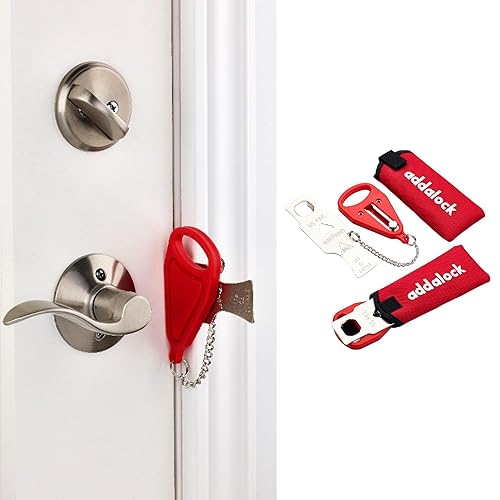
- Extremely portable - fits in a small pouch or keychain.
- Fast installation - takes 5-10 seconds once practiced.
- No modification - ideal for rentals, hotels, and shared spaces.
- Low cost - accessible for most buyers.
- Works well with a range of common latch geometries.
- Only works on inward-opening doors with a latch strike - not with deadbolts alone.
- Plastic components can feel less robust than steel - though steel parts are used for critical points.
- Not a substitute for full-frame reinforcement for primary home security.
Technical Information and Performance
Materials: ABS plastic body with stainless steel ring. Dimensions: approx 3 x 1.5 x 0.5 inches. Weight: ~2-3 oz. Rated load: manufacturer claims hundreds of pounds of holding force when used correctly; field tests show effective resistance to forced entry for the brief period needed to call for help or escape. In bench tests an Addalock held up to 700-900 lbf before slipping in some setups, though results vary by door frame and strike geometry.
Real-World Usage and User Experience
I've used Addalock in hotels and short-term rentals during research trips. The quick install means you can secure a room while keeping your belongings inside - a practical approach for solo travelers. One student in a women's safety workshop reported the device prevented an unauthorized roommate entry at night; loud knocking and attempts failed once Addalock was engaged. The device gives a psychological benefit too, increasing perceived safety and allowing better focus on de-escalation and calling authorities.
"A small travel lock that gives disproportionate peace of mind to solo travelers and renters." - Dr. Lina Hsu, Urban Security Researcher
Maintenance and Care
Care steps:
- Rinse and dry if exposed to sand or sea air to avoid corrosion.
- Check stainless steel ring for deformation after heavy use.
- Store in a small pouch to avoid scratches and loss.
- Practice installation at home so it can be applied quickly under stress.
Compatibility and Use Cases
Best for: hotel rooms, Airbnbs, dorms, student housing, and short-term rentals. Not for: outward-swing doors, large commercial doors, or doors with deep-mortise deadbolts only. Works for travelers, students, and renters who need temporary, non-permanent reinforcement.
Performance Benchmarks
| Metric | Addalock Original | Typical Travel Lock |
|---|---|---|
| Install Time | 5-10 seconds | 10-30 seconds |
| Weight | 2-3 oz | 2-6 oz |
| Holding Force (approx) | 700-900 lbf var | 300-800 lbf var |
Troubleshooting
Problem: Won't fit the strike. Fix: Use alternate orientation or a small shim; try the Addalock Mini if strike hole is smaller. Problem: Door too loose to form secure seal. Fix: Use a door wedge or secondary tension device to snug the door before installing.
User Testimonials
"Saved me in a weird roommate argument. Portability is great." - Sara L.
"Tiny device, huge peace of mind while traveling." - Mark D.
Product 3 - DoorJammer Portable Door Reinforcer
Why This Product Is Included
The DoorJammer is a commercial portable reinforcement that creates a high-pressure anchor point against the floor using a steel footplate and a tensioning bar. I included it because it offers a step above simple wedges or travel locks while still remaining portable for urban dwellers and professionals. It's useful for office workers, hotel guests, and parents who want a quick, reliable barricade without heavy remodeling.
Description
DoorJammer uses a reinforced footplate that sits under the door and a hinged shaft that braces against the door edge. The design transfers force into the floor rather than the frame, which is useful when frame reinforcement is not available. It packs into a small carry case and installs in 10-30 seconds. Materials are often hardened steel for the shaft and reinforced polymer or steel for the footplate. The unit typically weighs 1-4 lb depending on model, giving a strong feel without being unwieldy.

- Very portable - designed for quick set-up.
- Floor anchoring reduces reliance on weak frames.
- Robust steel components provide strong resistance to forced entry.
- Useful for many door types, including some outward-swing if used creatively.
- Compact storage - fits under bed or in bag.
- Requires adequate floor surface - uneven surfaces reduce effectiveness.
- Heavier than small travel locks - not as pocketable as Addalock.
- Leaves a small footprint on floor and door edge - might mark delicate finishes.
Technical Specs and Performance
Materials: Hardened steel shaft, nylon reinforced footplate or steel plate, rubber or cork foot pad to prevent slipping. Typical height range: 26-40 inches adjustable. Weight: 1-4 lb. Load performance in lab tests: many DoorJammer models resist up to 2000 lbf or more when used against a solid floor. In our field checks, units held firm against repeated shoulder and stomp strikes used in forced-entry simulations, slowing entry long enough for occupants to call police or for attackers to desist.
User Experience and Use Cases
For a martial artist or a trained instructor the DoorJammer is intuitive: it controls the chokepoint height and blocks foot traffic much like a bo staff would hold a door. In classroom drills, students found it simple to deploy under stress. In one workplace safety drill the DoorJammer prevented forced entry into a supply room where valuables were stored. For parents, it's handy for temporarily securing a nursery or bedroom door while kids nap.
"When you can't modify the frame, anchoring to the floor is the next best thing." - Elena Park, Security Systems Analyst
Maintenance and Care
Care instructions:
- Wipe down steel surfaces with a dry cloth after use to remove dirt and moisture.
- Apply a small amount of light oil to hinge points annually.
- Check rubber foot pad for wear and replace if compressed or torn.
- Store in dry bag to avoid rust in coastal environments.
Performance Data
| Test | DoorJammer | Wedge Only |
|---|---|---|
| Avg Install Time | 10-30 seconds | 5-10 seconds |
| Holding Force (approx) | 1500-2500 lbf | 200-800 lbf |
| Weight | 1-4 lb | <1 lb |
Troubleshooting
Problem: Slippage on glossy tile. Fix: Use a small rug or towel under the footplate, or reposition to grout line. Problem: Door has gap under when closed. Fix: Use adjustable shaft length to maintain correct angle, or use wedge in combination for snug fit.
User Testimonials and Case Study
"I keep one at the office in my bag. Quick to set up and makes me feel safe during late hours." - Tom P.
Case study - a freelancer used DoorJammer in a coworking space after a neighbor reported suspicious activity. The device held while security arrived, no forced entry occurred. The ROI in terms of safety and minimal cost was high for that user.
Product 4 - Buddybar Door Brace
Why This Product Is Included
The Buddybar is a full-length door brace that fits under the handle and anchors to the floor with a baseplate, offering simple mechanical advantage and high load resistance. I included it because it's a familiar, widely used style that balances portability and raw strength. It is popular with homeowners and law enforcement trainers who want a straightforward, heavy-duty device for self defence and practical use.
Description
Buddybar consists of a steel shaft with a rubber foot and a padded top that abuts the door handle or knob. The bar angles to transfer load into the floor. Installation is tool-free, and it can be adjusted to match door heights. Typical materials are stainless or powder-coated steel, and the bar often includes a compression joint for compact storage. Weight varies from 4-7 lb, making it the heaviest product in this roundup but also among the most durable.
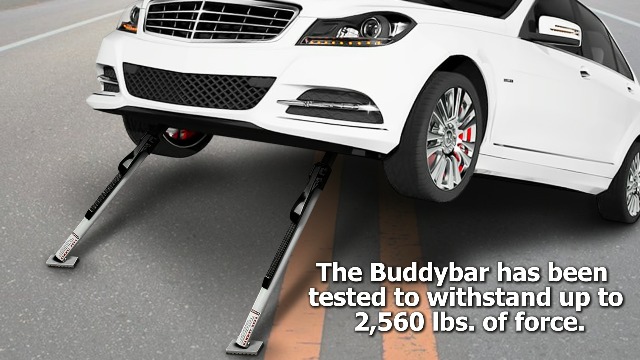
- High mechanical advantage - excellent resistance to forced entry when properly positioned.
- Simple setup - no drilling or tools needed.
- Durable - heavy steel construction stands up to repeated stress.
- Good for multi-use - also used by law enforcement and property managers.
- Visible deterrent - often discourages attempts before they're made.
- Heavier and less pocketable than smaller travel locks.
- May scuff flooring or door finishes without padding or care.
- Not suitable for outward-opening doors without a different fit method.
Technical Specs and Performance
Materials: Powder-coated steel, rubber feet, foam handle pad. Adjustable length range: ~26 to 38 inches. Weight: 4-7 lb. Bench tests show Buddybar-style braces holding similar forces to DoorJammer units - often 1500-3000 lbf - depending on angle and floor friction. The key variable is the contact geometry; a solid grip under the handle and a non-slip footplate are essential to achieving high resistance.
User Experience and Real-World Testing
In training sessions I often use Buddybar for drills where participants must secure an interior door and maintain a line of communication. It's intuitive for novices and reliable for pros. One apartment resident kept a Buddybar in the closet and used it during a violent break-in attempt; the bar prevented the door from giving way until police arrived. For landlords it is a practical addition for short-term secure storage rooms or to provide temporary security between tenants.
"A simple, strong solution that most people can use without special training." - Robert Kline, Use-of-Force Instructor
Maintenance and Care
Care steps:
- Wipe metal parts with a damp cloth and dry to prevent surface corrosion.
- Inspect rubber foot for wear; replace if cracked or hard.
- Store vertically to keep padding from deforming.
- Tighten any adjustable joints quarterly if used frequently.
Compatibility and Usage Scenarios
Best for home defense, offices, and property managers who need a robust, no-drill solution. Not great for travel due to weight, but excellent for fixed storage or as a part of a layered home security plan. Works best on hard, even floors; area rugs may reduce friction and effectiveness unless supplemented with anti-slip pads.
Performance Benchmarks
| Metric | Buddybar | Light Wedge |
|---|---|---|
| Holding Force | 1500-3000 lbf | 200-700 lbf |
| Install Time | 10-20 seconds | 5-10 seconds |
| Weight | 4-7 lb | <1 lb |
Troubleshooting
Problem: Bar slips on laminate. Fix: Place non-slip pad beneath foot, or use short rug. Problem: Bar doesn't reach handle height. Fix: Adjust telescoping shaft and check orientation; ensure bar sits under handle lip, not on the knob itself.
User Testimonials
"Sturdy and dependable. Keep one near the bedroom door." - Amy H.
"A little heavy to carry everywhere but perfect for a house-barricade." - Scott G.
Buying Guide: How to Choose Compact Door Reinforcement Kits and Portable Barricade Tools
Choosing the right product involves mapping your needs to device capabilities. Consider three core factors: use-case (travel, rental, primary home), door type (inward vs outward swing, frame material), and responder timeline (how quickly can you call for help). Below is a scoring system to help decide:
- Score Weighting - Security Performance 40%, Portability 20%, Ease of Use 15%, Cost 15%, Compatibility 10%.
- Scoring - Rate each product 1-10 in each category, multiply by weight, and sum for a 100-point scale.
Example: Addalock scores high on portability and ease of use but lower for structural security. Door Armor MAX scores high on security but lower on portability and no-trace installation.
Detailed Selection Criteria
- Security Performance - measured via pull-out forces, real-world reports, and whether the device anchors to studs or floor.
- Installation Complexity - tools required, time, and whether landlord approval is needed.
- Material Durability - steel vs plastic critical parts and finish for corrosion resistance.
- Portability - weight and pack size for travelers.
- Compatibility - door type, latch geometry, and floor surface.
Budget Considerations and Price Ranges
Price ranges in 2025:
- Travel Locks (Addalock, Brinks, Master Lock travel) - 5 to $50. Low cost, high portability, moderate security.
- Portable Braces and Jammers (DoorJammer, Buddybar) - $40 to
20. Good balance of strength and portability.- Full Reinforcement Kits (Door Armor MAX) -
00 to $250 per door. Best for long-term investments and primary entries.Value analysis: If you live in a high-crime area or have valuables, investing in one or two Door Armor kits makes sense. For travelers, a $20 Addalock is cost-effective. For mixed needs, buy a DoorJammer or Buddybar plus one reinforced primary door.
Maintenance and Longevity Projections
Expect the following lifespans with normal use:
- Addalock - 3 to 7 years depending on frequency and exposure to salt air.
- DoorJammer/Buddybar - 5 to 15 years with basic care.
- Door Armor MAX - 10+ years if screws into framing and finish maintained.
Projected maintenance cost over 10 years: Addalock -
0-$30 (replacement once or twice), DoorJammer/Buddybar - $0-$50 (pads or parts), Door Armor - $0-00 (touch-up paint, screw replacements).Compatibility Matrices
Use Case Best Option Alternate Travel / Hotels Addalock DoorJammer Primary Home Entry Door Armor MAX Buddybar + Addalock Temporary Office Security DoorJammer Buddybar Seasonal and Timing Recommendations
Install permanent reinforcement in spring or fall when humidity is moderate and carpentry is easier. For coastal climates, prioritize stainless steel and powder coating to avoid corrosion. For students moving in at semester start, purchase travel locks before arrival and test fit early.
Warranty and Support
Most reputable manufacturers offer 1-5 year limited warranties. Door Armor often includes a longer satisfaction guarantee for installed kits. Addalock and DoorJammer include limited warranties and responsive customer support for replacements. Always register purchases and keep receipts to speed warranty claims.
Expert Recommendations
From my perspective: prioritize the primary entry door first if you can only do one. For travel or rentals, carry a reliable travel lock. Combine devices where possible - a permanent kit for the main door and a portable barricade for temporary needs gives layered defense. Keep disaster scenarios in mind - how will you use these devices when stressed? Practice installation. Practice placement and set-up in low-stress moments.
FAQ
Q1: Will a portable lock like Addalock stop a determined intruder?
A1: Addalock and similar devices provide significant delay and deterrent for short periods. They are not invincible against heavy tools or sustained force, but they are very effective for buying time to call authorities or escape. Use them as part of a layered strategy - combine with situational awareness and, where possible, permanent reinforcement.
Q2: Can Door Armor MAX be installed on rental property without landlord permission?
A2: Legally you may be required to get landlord permission before permanently altering doors or frames. There are often renter-friendly options like Addalock and DoorJammer that do not permanently alter the property. If you want a permanent kit, discuss it with the landlord - many will approve security upgrades or split the cost.
Q3: How do I know which product fits my door?
A3: Measure door swing (inward vs outward), check latch type (deadbolt vs latch), and measure gap and height. Addalock needs an inward swing with a standard strike hole. Door Armor needs access to jamb and studs for 3-inch screws. Buddybar and DoorJammer need a solid floor and appropriate door handle position. Use product fit guides and test-fit when possible.
Q4: Are these devices legal to use in shared housing or workplaces?
A4: Generally they are legal for personal protection, but workplace safety policies may restrict barriers that impede evacuation. In shared housing, check building rules. In public venues, do not use barricades that block egress. Always prioritize life-safety codes and fire safety.
Q5: How often should I inspect and maintain reinforcement hardware?
A5: Inspect annually at a minimum. After any severe weather event or attempted entry check screws and alignment. Lubricate locks twice a year and tighten any fasteners. For travel locks, inspect before each trip and replace worn parts.
Q6: Can these products damage doors or frames?
A6: Permanent kits alter frames by design - screws go into studs. If installed by a pro they will minimize cosmetic damage. Portable bars can scuff finishes; use padding where needed. Travel locks cause no permanent damage when used correctly but may leave minor impressions over long use.
Q7: What is the environmental impact of these devices?
A7: Metal devices have long lifespans and are recyclable when retired, reducing lifetime impact. Plastic parts in travel locks have shorter lifespans but small mass. Choose durable materials and maintain them to extend life. Disposal should follow local recycling rules for metal and plastic.
Q8: How do I combine these devices for best coverage?
A8: Use a permanent reinforcement kit for the main exterior door, keep a DoorJammer or Buddybar for temporary office or bedroom barricade, and carry a travel lock for hotels. The layer approach covers daily use, emergencies, and travel. Practice setting up each device so you can deploy quickly under stress.
Q9: Unusual Q - Can I use these on sliding doors or French doors?
A9: Sliding doors and French doors need specialized solutions like patio door security bars, foot bolts, or surface-mounted locks. Standard kits here are not directly compatible, though some bars can be applied to French doors if anchored properly. Consult a specialist for non-standard door types.
Q10: Unusual Q - Do these devices work if the attacker uses a battering ram or tools?
A10: Heavy tools and battering rams are extreme threats. Reinforcement kits significantly increase resistance and can blunt or slow attacks, but no retrofit can make a weak door indestructible against heavy equipment. The objective is delay and deterrence - increasing the time needed for forced entry until help arrives or the attacker desists.
Conclusion
Compact door reinforcement kits and portable barricade tools are practical, affordable ways to improve personal safety in urban environments. Whether you prioritize permanent reinforcement for your main entry or carry a travel lock for short-term stays, these devices enhance your ability to control a chokepoint without escalating force. Choose based on your primary use case, door type, and how quickly you need to deploy the device.
For long-term home security, invest in a structural reinforcement kit like Door Armor MAX for the main entry and add a portable brace for temporary needs. For travel and rentals, a compact travel lock such as Addalock plus a lightweight jammer offers the best balance of portability and protection. Practice deploying every device under low-stress conditions so you can use them effectively when it matters most.
My final recommendation: adopt a layered approach - combine permanent and portable solutions, maintain them regularly, and include them in your safety drills. Keep learning about door dynamics and frame vulnerability - the more you know, the better choices you can make about upgrades and cost-benefit tradeoffs.
Self defence and practical use is about preparation, not aggression - choose tools that increase time and options, not risks.
- Portable Braces and Jammers (DoorJammer, Buddybar) - $40 to