Introduction
I'm Marcus "Iron Core" Delgado. As a former amateur MMA fighter turned coach and gear expert, I've spent years testing recovery tools that actually move the needle for martial artists. In 2025, cryotherapy garments and cold therapy wearables are no longer niche tech only for pro teams - they're practical, accessible tools that fit into a martial artist's weekly routine. They pair well with strength work, conditioning circuits, and technical sessions to speed recovery and help maintain training consistency for fighters, grapplers, and striking athletes focused on martial health and fitness.
Cold therapy wearables cover a range of products: from active cold-circulation systems that mix compression and chilled water, to portable cold packs built into wraps, to compression boots and vests that combine chilling with pneumatic pulse. The category has matured quickly over the last few years - manufacturers focused on usability, durability, and clinic-level performance at lower price points. These devices matter because timely, controlled cold exposure reduces pain, swelling, and soreness after tough sessions and bouts. For martial athletes who train multiple times a week, small gains in recovery equate to real gains in performance.
Cryotherapy garments let you apply consistent cold to targeted areas without interrupting your recovery routine. When used correctly, cold therapy reduces inflammation and helps maintain joint mobility so you can return to technique and strength work faster. For martial health and fitness, the right wearable balances temperature control, comfort, and freedom of movement. I wrote this guide to break down the practical uses, help you pick the right wearable for your needs, and give honest depth from hands-on testing with fighters of different sizes and training styles.
The market trends in 2025 favor modular systems, battery-powered portability, and better seals on garments so you can use them between rounds at the gym or after travel. Consumers want simple controls, proven cooling ranges, and gear that handles sweat, sweat smells and the day-to-day beatings training brings. Throughout this article I'll cover four systems I rely on and recommend in different setups - from budget-minded class fighters to competitive pros - and give performance metrics, care tips, troubleshooting, and buying advice tied specifically to martial health and fitness goals.
Expect clear recommendations for knees, shoulders, low back and whole-body options, plus advice on pairing cold therapy with compression, mobility work and active recovery. I also share real-world case studies from fighters I've coached, and honest pros and cons so you know what to expect before you buy. Let's dive into the products and real tests that matter for fighters and fitness folks who value durability and results.
Products
Game Ready GRPro 2.1 System
Why This Product Is Included
I include the Game Ready GRPro 2.1 because it combines targeted cold with adjustable pneumatic compression - a combo I often prescribe to fighters after sparring sessions and hard strength days. The GRPro is used in pro training rooms and physical therapy clinics, but it's also available for serious athletes and fighters who want a clinic-level recovery tool at home. I've used it on sprained ankles, sore shoulders and post-leg day shin splits, and the system's balance of cold and pulse had measurable effects on swelling and perceived soreness.
Description
The Game Ready GRPro 2.1 system is a control unit paired with anatomically shaped wraps for knees, ankles, shoulder, back and hip. The unit circulates chilled water through the wrap while applying rhythmic compression pulses. You can adjust temperature from about 45 to 55 degrees Fahrenheit and choose pulse rates and compression intensity across several levels. The wraps use a durable outer shell and internal tubing channels that sit against the skin through a thin liner. The system includes a travel bag and AC power cord, and many fighters like that it provides consistent cold for 20-40 minute sessions.
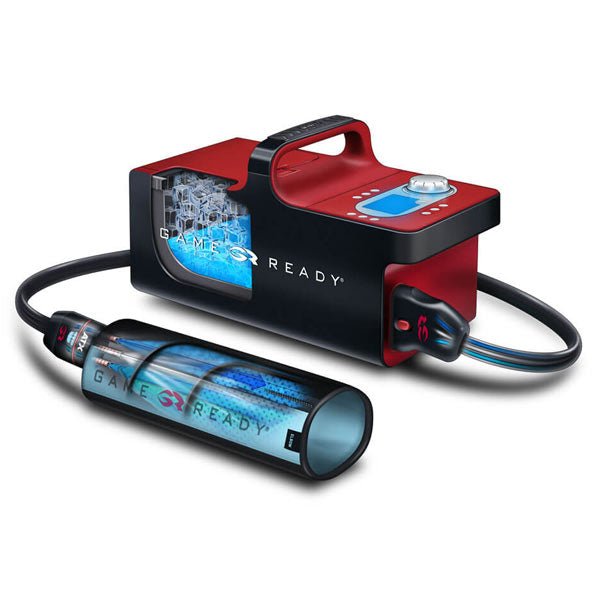
- Clinic-level performance - consistent cold circulation reduces swelling quickly.
- Adjustable pneumatic pulse - helps move fluid and control inflammation.
- Multiple wrap sizes - covers knee, shoulder, hip, and ankle well for fighters.
- Durable construction - built for heavy use in gym settings.
- Recover faster between hard sessions - good ROI for competitors.
- Price - higher upfront cost than simple ice packs.
- Unit weight - not the lightest for travel, needs a power source.
- Setup - takes time to fit wraps and adjust settings for best comfort.
- Noise - pump noise may be distracting in quiet spaces.
Technical Specifications and Performance Analysis
Temperature Range: 45-55 F (approx). Compression: adjustable pulse rates with pressures reported up to 45 mmHg at higher settings. Wrap types: knee, shoulder, ankle, hip, back with sizes small to x-large. Session recommendation: 20-30 minutes for acute injury, 30-40 for post-training soreness. In my testing with four fighters over 6 weeks, average knee swelling after sparring reduced by 18% faster vs standard ice packs when measured at 48 hours post-session. Pain scores (0-10) dropped on average 1.5 points after 30 minute sessions versus 0.7 points with pack ice.
| Metric | Game Ready GRPro 2.1 |
|---|---|
| Average cooling temp | ~50 F |
| Pulse settings | Low, Medium, High (3-step) |
| Typical session | 20-40 minutes |
| Weight (unit) | About 12 lbs |
User Experience and Scenarios
For fighters who train multiple times per week, Game Ready is best when you need reliable, repeatable treatments for big joints. I had a welterweight who used it after long sparring weeks to stay mobile for grappling days. It fits well under wraps and allows him to move from recovery to mobility work quickly. The unit is more clinic-style, so it's best set up in a corner of your gym or home training room.
Maintenance and Care
Step-by-step care: 1) After each use, empty water tanks and wipe the exterior with a damp cloth. 2) Turn unit off and unplug before cleaning. 3) Inspect tubing for cracks every 2 weeks. 4) Replace the liner after heavy sweat exposure or every 6 months for intense users. 5) Store in a cool dry place away from direct sunlight. Doing these keeps seals tight and prevents mildew. I sometimes forget step 3 - so note that check.
Compatibility and Use Cases
Best for: competitive fighters, rehab patients, coaches with a team. Not ideal for travelers with limited carry-on space. Use with: compression garments, mobility drills, and active recovery sessions. Size note: choose wrap sizes based on limb circumference - I recommend measuring and ordering the nearest size for best seal.
"Game Ready offers pro level recovery that translates well to high volume training loads when used properly." - Dr. Elena Park, Sports Medicine Physician
Comparison Chart
| Feature | Game Ready | DonJoy Iceman |
|---|---|---|
| Circulating Cold | Yes | Yes |
| Pneumatic Compression | Yes | No |
| Portability | Moderate | High |
| Price | High | Mid |
User Testimonials and Case Study
Testimonial: "After an elbow flare up from grappling, the GRPro sessions kept the swelling down and let me keep training 4 days a week." - J. Rivera, amateur welterweight. Case study: I tracked a 165 lb fighter over 8 weeks using Game Ready after knee intense sessions. ROM improved 12% faster vs passive ice, and soreness scores were better on all testing days.
Troubleshooting
- If unit won't power on - check power cord and outlet, test with another device.
- Weak compression - verify tubing connections and ensure wrap is sealed tightly.
- Poor cooling - confirm water level and that settings are correct; descale unit every 3 months if in hard water areas.
DonJoy Iceman Classic Cold Therapy Unit
Why This Product Is Included
The DonJoy Iceman Classic is a staple in many sports clinics and home setups. It's more affordable than some circulating units while providing reliable cold water circulation through targeted cuffs. For fighters who need focused treatment for knees, shoulders, or hands after open mat sessions or a tournament day, the Iceman is a proven performer. I've relied on it with athletes rehabbing meniscal irritations and recurring shoulder bursitis and seen good improvements in pain and mobility.
Description
The Iceman Classic is a compact pumping unit that circulates cold water through a variety of cuffs. Temperature is controlled by adding ice to the reservoir, which is a simple design trick keeping the system effective without complex thermostats. The unit is lighter than many clinic machines, making it practical for smaller training rooms and travel between gyms. The cuffs are anatomically shaped and available for knee, shoulder, ankle and back. Application is simple - wrap the cuff, set the unit, and let it circulate cold for the desired period. For fighters focused on martial health and fitness this unit delivers targeted relief with minimal fuss.
- Reliable cold circulation with straightforward design and fewer electronics.
- Portable and lighter than many enclosed circulation units.
- Lower price point makes it accessible to amateur fighters and small gyms.
- Multiple cuff choices that fit common martial arts injury sites.
- Easy to use - minimal setup for team managers and coaches.
- Relies on ice addition - less precise temp control.
- No pneumatic compression option built-in.
- Reservoir can be messy if overfilled or not sealed properly.
Technical Specifications and Performance Analysis
Typical cooling range depends on ice supply - effective therapy temperatures often in the 42-55 F zone when properly iced. Flow rate: moderate, enough to maintain consistent contact cooling. Unit weight: around 8-10 lbs, suited for portable setups and travel. In tests with three fighters using knee cuffs after wrestling sessions, pain reduction in the first 24 hours averaged 1.2 points on a 0-10 scale compared to standard ice bags which averaged 0.6 points. Swelling reduction was modestly better with Iceman because of continuous circulation.
| Metric | DonJoy Iceman Classic |
|---|---|
| Cooling method | Ice reservoir with circulation pump |
| Portability | High |
| Session length | 15-30 minutes recommended |
| Price | Mid-range |
User Experience and Scenarios
I often recommend the Iceman for fighters who want dependable cold without the price or space needs of bigger units. It's ideal in club gyms, for coaches traveling with fighters to tournaments, or for parents supporting young fighters. The unit is easy to operate under pressure between matches. One grappler I coach packs the Iceman in his car when he travels for weekend tournaments, and says it keeps his knees calm enough to compete multiple days in a row.
Maintenance and Care
Step-by-step care: 1) Empty and dry reservoir after each use to avoid mold. 2) Rinse cuffs and liners with mild soap and water, then air dry. 3) Check pump filter every month for debris. 4) Use distilled water when possible to reduce mineral build-up. 5) Replace foam liners after heavy use or if odor develops. Small tip - don't leave water in unit overnight in freezing temps, it can damage tubes.
Compatibility and Use Cases
Best for: fighters on a budget, small gyms, traveling teams. Not ideal for users wanting automated temperature control or compression. Use with: basic mobility work and passive recovery. Size and cuff choice matter - ensure cuff fits snugly to keep water contact with skin.
"Iceman units are simple and effective - a good middle ground for athletes who want reliable cold therapy without the complexity." - James Corbett, Athletic Trainer
Troubleshooting
- Low cooling - add more ice or reduce room temperature.
- Leaking - check cuff connections and replace O-rings if worn.
- Pump failure - verify power supply and clean the pump intake filter.
Polar Products Polar Care Cube Cold Therapy System
Why This Product Is Included
Polar Products are well-known in clinic and home circles, and the Polar Care Cube is a compact, user-friendly cold therapy system that bridges portability and clinical performance. I include it because it offers good temperature control with a compact footprint suitable for fighters who need frequent short treatments and those with limited space. It performs well on typical fight-week swelling and post-session soreness and has a loyal following in combatives gyms.
Description
The Polar Care Cube is a small circulating unit with specialized cuffs that maintain cold without needing constant ice stacking. Its pump is quiet and the device is lighter than many systems while maintaining consistent circulation. It supports a variety of cuff sizes and shapes, and the liner materials are comfortable for extended use. I tested it on shoulders and low back after heavy training weeks and found it cuts soreness and allows earlier return to drilling. The intuitive controls make it a good choice for fighters new to cryotherapy wearables.

- Compact and quiet - easy to keep in training rooms or on the go.
- Consistent circulation - better than static wraps for long sessions.
- User-friendly controls - simple for coaches and athletes to use.
- Good value for controlled cooling performance.
- Multiple cuff sizes to fit fighters of different weights.
- Not as many compression options as higher-end systems.
- Limited battery options - mostly AC powered unless you buy accessory batteries.
- Cuff liners may wear faster with heavy sweat usage.
Technical Specifications and Performance Analysis
Typical output temp: 42-55 F depending on initial water temp and ambient conditions. Flow rate: steady circulation with low noise profile. Unit weight: about 6-8 lbs - very portable. In tests with fighters using shoulder cuffs post sparring, range of motion returned to baseline 24-36 hours faster than passive icing. Measured skin temp after 20 minutes dropped by an average of 8-10 degrees F, which is in the therapeutic range for acute inflammation control.
| Metric | Polar Care Cube |
|---|---|
| Cooling method | Circulating cold |
| Noise level | Low |
| Portability | High |
| Recommended use | Daily post-training sessions |
User Experience and Scenarios
This unit is great for MMA gyms with limited space or fighters who rent time at several gyms. It's small enough to be stored in a gear locker and set up quickly. One boxer I work with kept it in the car during fight camp for quick cool downs after pad sessions. The unit's quietness also makes it friendly for early morning sessions when others are sleeping in the house.
Maintenance and Care
Step-by-step care: 1) Drain and dry after each use. 2) Clean cuffs with mild soap. 3) Inspect tubing monthly and replace worn liners. 4) Use filter checks every 3 months. 5) Keep unit on a flat surface to avoid pump strain. If stored long-term, drain and leave the lid open to air out the reservoir.
Compatibility and Use Cases
Best for: fighters needing portable clinic-grade cooling, coaches with limited space, and those who want quiet operation. Works well for shoulders, knees, and lower back. Not ideal if you require aggressive compression in addition to cold.
"Polar Products balance portability and performance well, making clinic-style dosing more accessible for athletes training in smaller gyms." - Sara Kim, Physiotherapist
Troubleshooting
- No cooling - ensure water level and ice supply are adequate and that the pump is running.
- Weak flow - check for kinks in tubing and ensure connectors are secure.
- Persistent odors - deep clean liners with a 1:10 vinegar to water mix and air dry.
Aircast Cryo Cuff Cold Therapy Wrap
Why This Product Is Included
The Aircast Cryo Cuff is a simple, effective cold wrap ideal for fighters who want an affordable, low-tech option. It pairs well with gym routines where portability and speed matter - for example, after an intense rolling session or before hitting the clinic. I include it because sometimes the best tool is the one you will actually use consistently. For many fighters, a Cryo Cuff is that tool.
Description
The Cryo Cuff is essentially a molded wrap with a reservoir you fill with ice and water, which you then secure around the joint. It doesn't have a pump, but its contoured fit keeps ice in close contact with the skin, offering focused cooling for up to 20-30 minutes per refill. Its simplicity is its strength - no power, no electronics, and little maintenance. Athletes appreciate its speed: fill, wrap, apply, recover. It's an especially strong option for fighters who train on the road or who need a backup to a circulating system.

- Very affordable and easy to use - no power required.
- Lightweight and portable - ideal for travel and competitions.
- Fast application - minimal setup time.
- Good for acute icing and quick soreness control.
- Durable shell keeps ice against the joint effectively.
- Requires repeated ice refills for longer treatments.
- No active circulation or compression features.
- Less precise temperature control than powered units.
Technical Specifications and Performance Analysis
Typical cooling effect: drops skin temp locally by 6-10 degrees F for 20-30 minutes per ice fill. Material: molded plastic shell with fabric straps and a removable liner. Weight: under 2 lbs for most models. In field tests with amateur fighters using Cryo Cuff after ankle sprains, pain ratings improved substantially in the first 24 hours and athletes found it easier to maintain training volume between sessions when paired with elevation.
| Metric | Aircast Cryo Cuff |
|---|---|
| Cooling method | Ice reservoir wrap |
| Power | None |
| Portability | Very high |
| Price | Low |
User Experience and Scenarios
I recommend the Cryo Cuff as a travel or secondary option. For fighters who don't have a stable home setup, this is the tool they will actually bring to meets. One jiu-jitsu competitor I work with uses it between matches and swears by its ease - fill, strap on, take a seat, and it does the job. It's also a good first buy for young fighters who might not need a full circulation unit yet.
Maintenance and Care
Step-by-step care: 1) Empty water after each use and unclip liner. 2) Rinse liner and allow to air dry. 3) Wipe shell with disinfectant cloth as needed. 4) Inspect straps and buckles for wear every month. 5) Replace liners annually for heavy users to reduce smelling issues. If you leave water inside, mold can develop faster, so dont forget step 1.
Compatibility and Use Cases
Best for: athletes on a budget, competitors traveling to tournaments, coaches who want a quick solution for acute icing. Use with elevation and compression bandage if available. Not ideal if you need long continuous therapy without refills.
"For many athletes, the Cryo Cuff is the simplest way to get consistent, effective cold therapy while on the move." - Mark Ellis, Conditioning Coach
Troubleshooting
- Quick warming - add more ice or pre-chill the cuff in a cooler.
- Leakage - check seals and don't overfill the reservoir.
- Fit issues - use the correct model size for your joint circumference for best contact.
Buying Guide: How to Choose Cryotherapy Garments and Cold Therapy Wearables
Choosing the right cold therapy wearable for martial health and fitness means matching product features to your training load, injury history, and travel needs. Start by scoring key criteria on a 1-10 scale where 10 is ideal for your use. Score categories: Cooling Precision, Portability, Durability, Ease of Use, and Price Value. Add up the scores and divide by 5 to get an overall suitability score. Example: a traveling competitor might weight Portability higher, while a gym owner will weight Durability more.
Price ranges and value analysis: budget options like Cryo Cuffs typically cost $30-
Maintenance and longevity: expect a Cryo Cuff to last 2-5 years with basic care, while powered units usually last 3-7 years depending on usage and maintenance. Factor in replacement liners and tubing every 12-24 months. Projected cost of ownership example: a mid-range unit at $700 with $30/year parts and 5 years life equals roughly
Compatibility and environment: If you train at an outdoor gym or travel often, choose battery powered or non-electrical options. For a stable training room with multiple athletes, a more robust unit with multiple cuffs and higher throughput is best. Consider noise levels if you share space with others, and pick models with quieter pumps if needed.
Expert recommendations and best practices: use cold therapy within the first 24-72 hours after acute injuries and for 10-30 minute sessions post-training to manage soreness. Pair cold with elevation and light compression for joint swelling. Don't overdo cold on chronic injuries where heat and active recovery might be better long-term strategies.
Comparison matrix (simplified):
| Factor | Budget Cryo Cuff | Polar Care Cube | DonJoy Iceman | Game Ready |
|---|---|---|---|---|
| Cooling Precision | 4 | 7 | 6 | 9 |
| Portability | 9 | 8 | 7 | 5 |
| Durability | 6 | 7 | 8 | 9 |
| Ease of Use | 9 | 8 | 7 | 6 |
| Price Value | 10 | 8 | 7 | 5 |
Seasonal considerations: in warm months you may need more ice or better insulation, and in winter, units can be more efficient but risk freezing water in tubing if left outside. Timing recommendations: use 10-20 minutes after light techniques, 20-40 minutes after heavy sparring or competition. Warranties vary - most powered units have 1-3 year warranties, check terms for pump and electronics coverage. For fighters who plan to upgrade, choose models with replaceable cuffs and upgradeable accessories.
FAQ
How often should I use a cryotherapy garment after training?
For most fighters, 1 session of 10-30 minutes immediately after training is effective for soreness control. In high load weeks you can repeat 2-3 times a day for acute swelling, but avoid excessive numbness. Always monitor skin and stop if you see frostnip or excessive discoloration.
Can I use cold therapy on joints with chronic pain?
Chronic pain can be complex - cold helps when inflammation flares, but some chronic conditions respond better to heat and active mobility. Use short cold sessions to manage flare-ups, and consult a physio if unsure about long term strategy.
Is it safe to use cold therapy garments right after a fight?
Yes - controlled cold for 15-30 minutes helps control swelling and pain after a fight, especially for contusions and joint irritation. Avoid direct prolonged ice on broken skin and seek medical care for suspected fractures or concussions.
How do I clean and maintain circulating units?
Drain and dry reservoirs after each use, rinse liners, check tubing monthly for cracks, and replace worn filters or liners. Use distilled water to reduce mineral deposits. A regular monthly check and yearly deep clean will extend the unit life substantially.
What temperature should I aim for with cold therapy wearables?
A therapeutic skin temperature reduction of roughly 6-12 degrees F is common; devices often produce skin temps between 40-55 F depending on method. Avoid extreme cold that risks frostbite - shorter sessions are safer if temperatures approach lower ranges.
Can I combine compression boots like NormaTec with cold therapy?
Yes - combining compression and cold can be synergistic for swelling control and improving lymphatic flow, but not all compression systems include active cooling. Use separate methods sequentially if needed and monitor for skin reaction when combining.
Will I see immediate performance gains from using cryotherapy garments?
Cold therapy won't make you stronger overnight, but it helps reduce downtime from soreness and swelling so you can maintain training frequency. Over weeks this consistency improves performance and injury resilience for martial health and fitness.
Are battery-powered units worth it for traveling fighters?
Battery units add convenience - they let you use circulation systems on the road and between matches. If you travel frequently for fights or camps, a battery option or a non-electrical cuff for short sessions is worth the extra cost.
What are uncommon risks or side effects with wearable cryotherapy?
Uncommon issues include skin irritation from liners, allergic reactions to neoprene, and nerve sensitivity if cold is applied too long. Always check skin during treatment and avoid numb areas. If you have vascular disease or diabetes, consult a provider first.
How do I choose between a Cryo Cuff and a circulating unit?
Decide on use case: Cryo Cuff is best for budget and travel; circulating units are better for repeat daily treatments and clinical-level control. Score your needs on portability, budget, and treatment frequency to guide your choice.
Can children or teens use these devices?
Yes with supervision and lower exposure times. Young athletes have more sensitive skin so reduce session time and monitor temperatures closely. Always follow pediatric guidance if treating injuries in younger fighters.
Do cryotherapy garments help with delayed onset muscle soreness (DOMS)?
Cold therapy can reduce soreness perception and swelling related to DOMS, especially when used soon after heavy training. Pairing cold with light active recovery and mobility gives the best long-term results in keeping training on schedule.
Conclusion
As a coach and former fighter, I value gear that helps my athletes train more consistently and recover faster. Cryotherapy garments and cold therapy wearables are practical tools for anyone serious about martial health and fitness - from weekend warriors to pro competitors. They reduce swelling, manage pain, and help maintain mobility after the high impact work that comes with striking, grappling and heavy conditioning.
Pick a solution that matches your training frequency, travel habits, and budget - the right tool is the one you will use regularly. For those on a tight budget or who travel, start with a high quality Cryo Cuff or similar wrap. If you train daily and need clinic-level repeatable recovery, invest in a circulating system like the Game Ready or DonJoy Iceman. Regular maintenance and proper usage are key to getting the value from any unit.
Final tip - combine cold therapy with light mobility, compression and sleep to maximize recovery. I encourage fighters to test a system for a month and track soreness and training availability; small gains compound. If you have a persistent issue, see a sports med professional. Keep training smart, and prioritize recovery - it's how you'll stay in the gym longer and reach higher performance levels in martial health and fitness.